Tools for Exploratory Search and Web Annotation
There's a whole lot to write about building a personal information system. The Memex, described in 1945 by Vannevar Bush, inspired an ocean of thoughts on augmentation and human-computer interaction (perhaps most prominently championed by Doug Engelbart).
However, personal libraries and knowledge work pre-date the days of the computer. The history of information management is fascinating, but that's for another time. Here, I want to introduce two of my favourite tools and a simple way to link them.

Hypothesis — Annotating the Web
Hypothesis is an open-source initiative to annotate the web. It invites a conversation with the document, allowing you to revisit that conversation in the future.
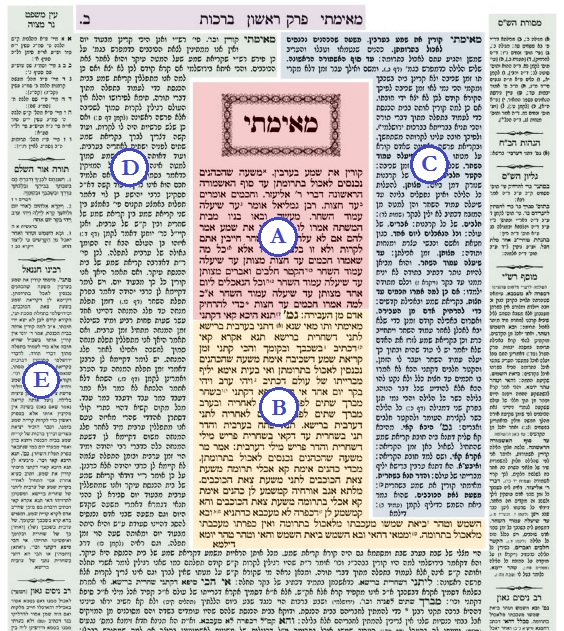
This is not conceptually new. A much older example of this type of layered conversation is the Talmud, a central Jewish text, printed with the primary text in the center and centuries of commentary layered around the margins.
Obsidian.md — The Power of Linked Thought
Organising notes in hierarchical folders is clunky and not how the mind works. We connect things in intricate ways. A note relevant to one topic may be useful across multiple contexts.
The most vocal advocate of hypertext is still Ted Nelson, who has defended for decades that hyperlinks should go both ways. Through bidirectional links, we create a network of notes carrying an implicit hierarchy.
Obsidian.md revivalized enthusiasm for these "tools for thought." It acts as a personal wiki with bidirectional links and #tags, fostering what some call "gardening" of notes: revisiting and connecting ideas over time.
Linking the Two — Linked Annotations
I got very excited about the idea of having highlights and annotations directly populating a network of notes, as it connects neatly two intuitive ways of engaging with knowledge. One of the issues I've found with bookmarks and notetaking (I use pinboard for this) is how difficult it can be to revisit them, or to navigate through previously explored topics (cf. gardening). Obsidian offers this seemlessly with tags, hyperlinks and the graph view.
I've put instructions and a Python script in this GitHub repository to export Hypothesis annotations as Markdown files into Obsidian. The process is as simple as exporting Hypothesis annotations and parsing the JSON file to extract separate Markdown files, while grouping highlights and notes on a single document.
I hope this will encourage more annotations ☀️ and more gardening 🌱.
